Tracing Seasonal Produce Through a Nutritionist's Weekly Record
The produce section of a weekly food record contains more information than the calories column. When the same journal tracks purchases, preparation methods, and the proportion of the plate occupied by vegetables and fruit across fourteen consecutive weeks, a structure emerges — one tied to the agricultural calendar rather than personal resolve. This record began in October and ran to January. The findings, modest in ambition, point toward the value of seasonal rotation as a practical nutritional variable.
The Record as a Nutritional Instrument
A food journal functions differently depending on what it records. When restricted to calorie figures, it narrows attention to a single dimension of food. When expanded to include vegetable variety, fruit frequency, cooking method, and meal timing, it becomes a more complete account of nutritional behaviour. The record used in this observation tracked all of these variables, with particular attention to which seasonal produce appeared in each week's shopping and how that produce was distributed across meals.
The first observation was structural: during weeks when root vegetables dominated — parsnips, celeriac, swede — the plate proportions shifted noticeably. Root vegetables occupy volume and contribute a sense of satiety that lighter produce does not. This was not a deliberate strategy on the part of the person keeping the record; it was the natural consequence of cooking with what was available and affordable in the autumn months. The connection between seasonal availability, purchasing habit, and portion composition was direct and measurable.
The second observation concerned variety. Weeks with higher vegetable diversity — defined as five or more distinct species across the week — corresponded with lower reliance on processed food items. The causal direction is not established from a single observational record, but the association was consistent enough across the fourteen weeks to warrant documentation.
Fruit Intake Across the Autumn-Winter Transition
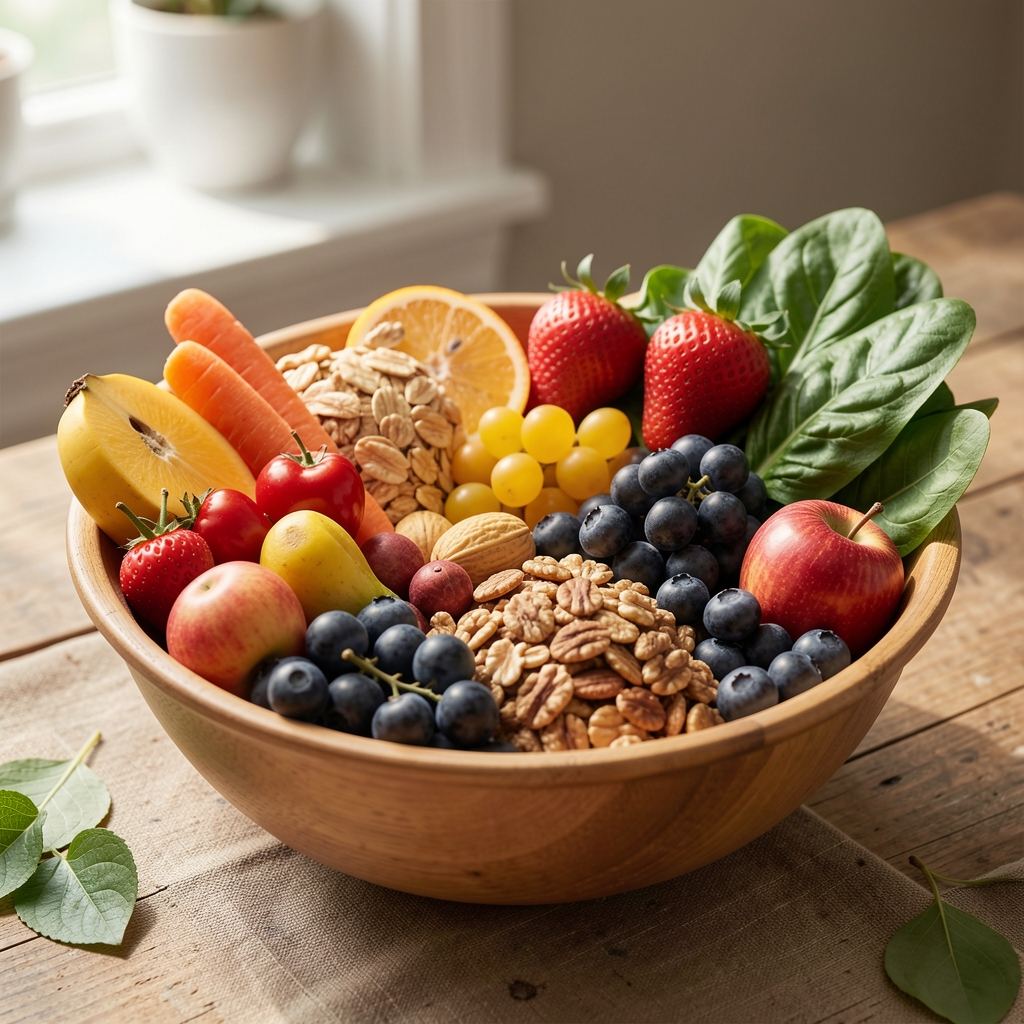
Fruit intake declined between week six and week ten of the record — the period corresponding with mid-November to mid-December. This decline was not explained by conscious decision. When reviewed in interview, the record-keeper noted that fruit had become less visible: the summer bowl of stone fruit and berries had been replaced by stored apples and pears, which were less immediately accessible on the counter. The spatial arrangement of food in a domestic kitchen, it appears, influences its consumption frequency. An apple in a bowl is eaten more readily than an apple in a refrigerator drawer.
The nutritional implication is minor in isolation but meaningful in aggregate. Fruit contributes dietary fibre and supports a sense of fullness between meals. Its declining presence during the darkest weeks coincided with an increase in the consumption of denser, prepared snacks — not sugary confections, but crackers, cheese, and bread. The total energy intake did not spike dramatically; the pattern was subtler, a gradual replacement of one type of between-meal eating with another.
The record recovered in January with the arrival of citrus season. Blood oranges, clementines, and unwaxed lemons reappeared in the shopping log. Their presence was not planned — it reflected market availability and price. This points toward a broader principle: that engagement with seasonal produce, without any formal nutritional intent, naturally reintroduces variety into the diet at intervals defined by the agricultural calendar.
"Engagement with seasonal produce, without any formal nutritional intent, naturally reintroduces variety into the diet at intervals defined by the agricultural calendar."
Weight Observations Across the Fourteen-Week Period
Weight was recorded weekly, in the morning, without directive or target. The record was kept as observation rather than management. Across the fourteen weeks, weight remained within a range of 2.4 kg — a figure consistent with normal variation for an adult of the subject's build. There was no dramatic loss or gain. What the record shows, instead, is a modest and gradual pattern: weeks of higher vegetable diversity and fruit presence corresponded, on the whole, with the lower end of the weight range. Weeks of lower variety — mid-November and the first week of January — sat at the higher end.
This is not a finding that supports any particular nutritional claim. A fourteen-week observational record of one individual provides no basis for generalised conclusions. What it does offer is a structured illustration of how food choices, seasonal availability, and weight exist in a relationship of mutual influence — one that becomes legible only when the record is long enough and detailed enough to trace.
The value of food journalling, as practised here, was not the discovery of a formula. It was the cultivation of attention — a more precise awareness of what actually enters the diet, and when, and in what proportion. That awareness, independently of any subsequent intervention, represents a meaningful shift in how a person relates to their own eating patterns.
The Weekly Rhythm as a Unit of Nutritional Analysis
Single-day food records are common in nutritional literature and in personal practice. The seven-day unit offers a more useful frame for seasonal produce analysis because it captures one full market cycle, one full preparation cycle, and one full working week. The shopping decisions made on a Saturday morning shape what is available in the kitchen on a Wednesday evening. The relationship between purchase and consumption is temporal as well as spatial.
Over the fourteen weeks, the record showed that weeks beginning with a market visit — as opposed to a supermarket visit — contained greater produce variety. Market purchases in autumn and winter skew naturally toward what is abundant: brassicas, root vegetables, stored alliums, and citrus when in season. Supermarket purchases, by contrast, reflected a broader but less seasonally distinctive range, including produce transported from outside the UK agricultural calendar. Neither pattern is objectively superior, but the difference in dietary variety was measurable and consistent.
The practical implication is straightforward. A weekly food record structured around shopping decisions — where, when, and what was purchased — provides a more useful basis for nutritional analysis than a record structured around eating occasions alone. The plate is partly determined by what is in the kitchen, which is partly determined by what was purchased, which is partly determined by where the purchase was made. Tracing the chain from source to plate adds precision to the observation.
Whole Foods, Processing Levels, and Seasonal Alignment
A consistent finding across the fourteen weeks was the inverse relationship between seasonal whole food presence and processed food reliance. This was not a strict inverse — the record contained processed items throughout — but the proportion shifted. During weeks of high seasonal produce engagement, processed items occupied a smaller portion of meals. During the November dip in fresh produce, their proportion grew.
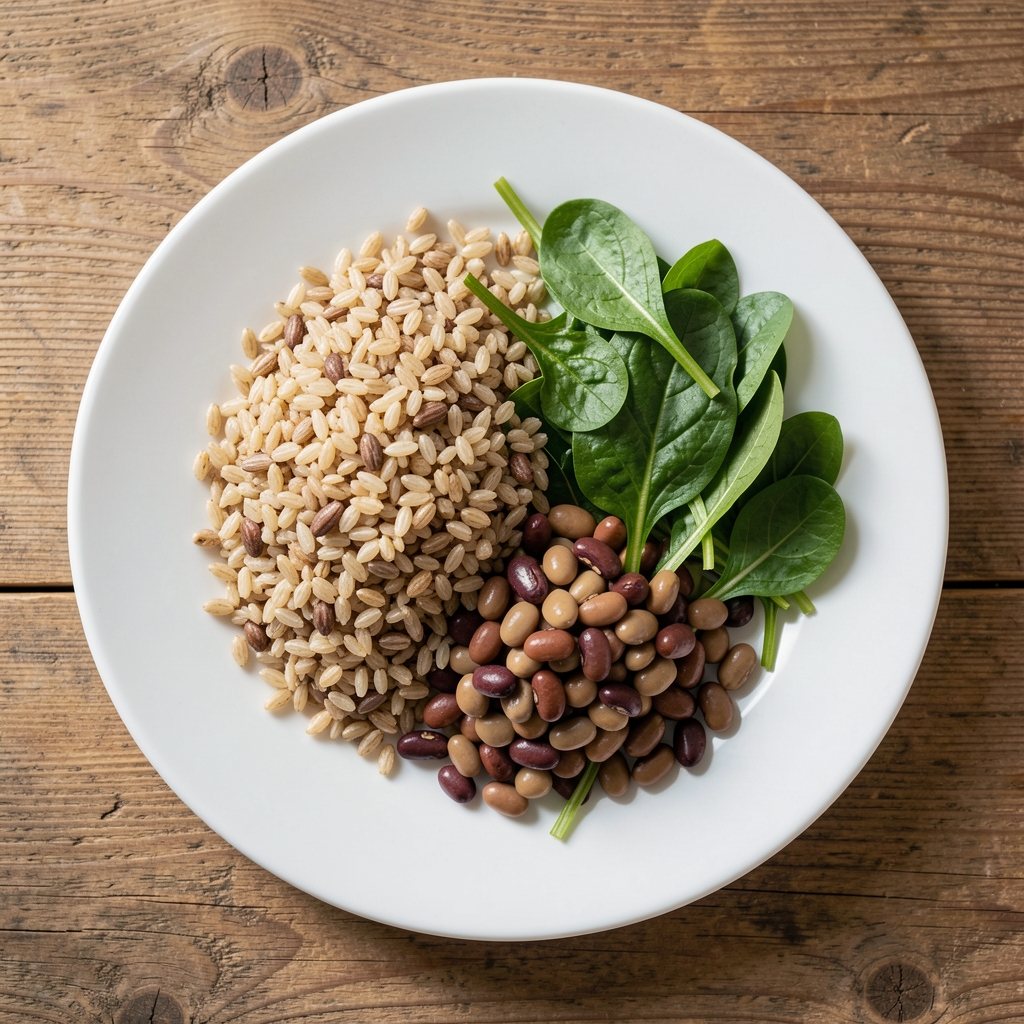
Whole foods, as categorised here, included all unprocessed or minimally processed items: fresh vegetables, fresh and dried fruit, legumes, whole grains, eggs, and unprocessed meat and fish. Their nutritional density — the concentration of fibre, protein-rich content, and micronutrients per unit of volume — supports a sense of satiety and contributes to sustained energy through the day. When these foods are in season and accessible, they tend to displace processed alternatives not through conscious substitution, but through simple availability.
The record closes with a practical note. The most effective nutritional adjustment documented across the fourteen weeks was not a change in eating behaviour per se. It was a change in purchasing behaviour — specifically, the reintroduction of a weekly market visit in early December, which reversed the November decline in produce variety within two weeks. Structural changes to the food environment, even modest ones, carry more weight in the nutritional record than comparable efforts of intention alone.
- 01 Seasonal root vegetables in autumn shifts plate composition toward higher satiety without deliberate planning.
- 02 Weeks with five or more distinct vegetable species corresponded with lower processed food consumption.
- 03 Fruit intake declined mid-winter due to spatial visibility, not dietary preference.
- 04 Weight remained within a 2.4 kg range across 14 weeks; lower-variety weeks sat at the higher end.
- 05 Market purchasing correlated with greater weekly produce variety than equivalent supermarket visits.

Eleanor Whitfield is the primary editor of Keldova Almanac. Her work focuses on the documented relationship between food environment, seasonal availability, and daily nutritional practice. She has maintained a continuous food record since 2021.
More from Eleanor Whitfield →